The 5 Things Every Upstate SC Retiree Wishes They’d Known Before Retiring
.webp)


After decades working at BMW, Michelin, or Fluor in the Upstate, retirement is finally within reach. But here’s what we’ve learned helping thousands of South Carolina retirees over 25+ years: those who thrive aren’t necessarily the ones with the most money—they’re the ones who knew what to plan for.
I’ve heard it countless times in our Greenville, Spartanburg, and Anderson offices: “I wish someone had told me this before I retired.” Today I’ll share the five things nearly every retiree wishes they’d known sooner—insights that form the foundation of our Common Sense Retirement Roadmap.
An Income Plan Should be Part of Every Retirement Plan
1. Your Paycheck Doesn’t Automatically Replace Itself
For 30 or 40 years, money appeared in your account every two weeks like clockwork. Then suddenly on your first day of retirement, it doesn’t.
Social Security helps, but here’s the reality: the average monthly benefit in South Carolina is around $1,900¹. If your monthly expenses run $5,000—typical for Upstate couples—you’ve got a $3,100 monthly gap to fill. Every month. For potentially 30 years.
Robert and Linda from Travelers Rest learned this the hard way. After Robert’s 28 years at BMW, they had $850,000 saved. But they hadn’t thought through how to turn savings into monthly income. They had money but no paycheck.
You need a Retirement Income Generator (RIG)—layering multiple income sources:
- Social Security: Guaranteed for life, adjusts for inflation
- Pension benefits: If available from employers like Michelin or BMW
- Strategic withdrawals: From 401(k)s and IRAs, carefully planned
- Fixed income strategies: Properly structured annuities or bond ladders
- Dividend investments: Quality companies providing income and growth
The goal? Create enough guaranteed income to cover essentials—mortgage, food, insurance, taxes, utilities, healthcare—without constantly worrying about the stock market.
Poorly Timed Market Swings can Wreck a Financial Plan
2. Market Volatility Matters More at 65 Than at 45
When you’re 35 and the market drops 30%, it’s uncomfortable. When you’re 65 and retired? It can be devastating.
This is “sequence of returns risk”—one of retirement planning’s most critical yet least understood concepts. If you retire right before a market crash, you’re pulling money from accounts that are down. Those shares you sell? They never recover.
James, a Michelin executive who retired in late 2021, had $1.2 million when markets were flying high. Then 2022 happened—the S&P 500 dropped about 18%² and his bond portfolio was down too. James needed $60,000 annually for expenses. By year-end, his portfolio had fallen to $950,000—from both market losses and forced selling at depressed prices.
At 35, this would’ve been a buying opportunity. At 66 and retired? It threatened his entire plan.
The solution: bucket strategy. We like folks to think about keeping 3-5 years of expenses in stable investments and strategies. Even if stocks drop 30%, it can help you not have sell shares at depressed prices. Your long-term investments can stay invested for growth while short-term needs are protected.
Taxes are a Critical Consideration for an Effective Retirement Plan
3. Taxes Don’t Retire When You Do
“I’ll be in a lower tax bracket now that I’m retired, right?”
Maybe. But probably not as much as you think. Sometimes you’re actually in a higher bracket.
If you maxed out your 401(k) for 30 years, every dollar gets taxed as ordinary income when withdrawn. And at age 73 (or 75), Uncle Sam forces Required Minimum Distributions (RMDs) whether you need the money or not³.
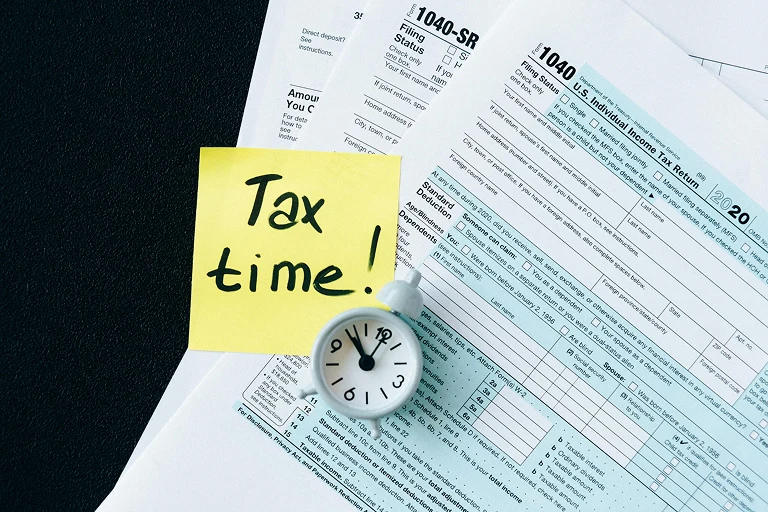
Sarah and Tom from Greenville did everything “right”—maxed out 401(k)s for decades, accumulating $1.4 million. But our projections showed between ages 73-85, they’d be forced to withdraw roughly $800,000—all taxable. Factor in Social Security (up to 85% taxable) and their effective marginal rates hit 25-28%.
The real punch? When one spouse dies, the survivor files as “single” with narrower tax brackets. Their estimated lifetime tax bill? Over $425,000.
But there’s good news. Tax cuts have been extended, and those 65+ get an extra $6,000 standard deduction per person through 2028⁴—$12,000 for married couples.
This creates opportunities for strategic Roth conversions. Convert tax-deferred money to Roth IRAs now while rates are low. You’ll pay taxes on conversions, but then that money grows tax-free forever—no RMDs, no future taxes.
Roth conversions are not always a good fit for everyone, but we’ve seen them save clients tens of thousands, sometimes hundreds of thousands of dollars on taxes.
Your Financial Advisor Should Understand and Help You With Medicare
4. Healthcare Costs Are Higher and More Complex Than Expected
Retiring before 65? What’s your health insurance plan?
COBRA lasts only 18 months and is expensive. Some private ACA marketplace coverage can run $2,000+ monthly for Upstate couples—$24,000 yearly before any deductibles.
At 65, Medicare provides relief but isn’t free or comprehensive:
Between Part B, Part D, and Medicare Supplement plans, we see folks pay $500-700 monthly minimum just for premiums. It could be half that if you are single, but that’s still a lot of money each month.
The IRMAA trap: If income exceeds $206,000 (married filing jointly), you pay surcharges increasing Part B and Part D premiums⁶. Those RMDs we discussed? They can push you over IRMAA thresholds, costing thousands in additional premiums annually.
The real concern: long-term care. South Carolina nursing homes cost a median $8,213 monthly—nearly $100,000 yearly⁷. Medicare covers almost none of it.
My grandfather’s Wyoming farm story illustrates this painfully. He never planned for long-term care because he didn’t think he’d need it. When health issues forced him into a nursing home, my grandmother had to quickly sell the farm to pay bills. Quick sales mean cheap sales. His plans for providing security evaporated because of one unplanned expense.
Modern solutions exist beyond traditional “use it or lose it” policies—hybrid life insurance with long-term care riders, annuities with care benefits—providing protection without old policy downsides.
Comprehensive Retirement Planning is Key
5. A Good Plan Beats a Great Portfolio

The biggest lesson: having money isn’t the same as having a plan.
We regularly meet people in Greenville, Spartanburg, and Anderson who’ve accumulated substantial wealth—401(k)s from BMW or Michelin, multiple IRAs, brokerage accounts, scattered savings. They have assets, sometimes considerable ones. But when we ask “What’s your income strategy?” or “How are you managing tax exposure?”—they’re uncertain.
They have a portfolio. They don’t have a plan.
A portfolio is accounts and investments. A plan answers critical questions:
- Income: How much monthly? From where? How does it keep pace with inflation? What if markets crash?
- Investments: Proper allocation? Matching risk tolerance? Adequate diversification? Protection against sequence risk?
- Taxes: Strategy for minimizing taxes over 20-30 years? Taking advantage of Roth conversions? Managing RMDs?
- Healthcare: Medicare and supplement plans? Long-term care preparation? IRMAA awareness?
- Legacy: What happens when you pass? Estate structured efficiently? Spouse financially secure? Legacy plans?
This is why we developed the Common Sense Retirement Roadmap—our systematic process addressing all five pillars. Every client goes through this roadmap because retirement is too important for guesswork.
You wouldn’t build a house by piling lumber and hoping it becomes livable. You need blueprints, foundation, systems working together. Retirement is identical.
Your Next Steps
Don’t wait until three months before retirement to plan. The smoothest retirements belong to those who started 5-10 years ahead, with time to optimize Social Security, execute Roth conversions, de-risk portfolios, and establish healthcare and legacy plans.
At Common Sense Retirement Planning, we’ve served Upstate retirees for 25+ years with offices in Greenville, Spartanburg, and Anderson. We start with complimentary consultations reviewing your situation and identifying gaps or opportunities.
We’re not here to sell products or earn commissions. We’re your retirement planning partner, helping you navigate this major life transition with confidence and clarity.
You only get one opportunity to retire well. Let’s ensure you have the plan for a confident one.
References
- Social Security Administration. Average Monthly Benefit Data, 2024.
- S&P 500 Annual Returns, 2022 Market Performance Data.
- Internal Revenue Service. Required Minimum Distribution Rules, Publication 590-B.
- Tax Cuts and Jobs Act Extension Provisions, 2024.
- Centers for Medicare & Medicaid Services. 2024 Medicare Costs.
- Centers for Medicare & Medicaid Services. 2024 IRMAA Income Thresholds.
- Genworth Financial. 2023 Cost of Care Survey, South Carolina Data.
The information and opinions contained herein provided by third parties have been obtained from sources believed to be reliable, but accuracy and completeness cannot be guaranteed by Common Sense Retirement Planning.
This is intended for illustrative purposes only. Your results will vary. Past performance does not ensure future performance or results.