Why Market Risk Matters More in a Financial Plan at 60 Than It Did at 40
.webp)


I want to tell you about two people who experienced the exact same market drop and had completely different outcomes.
The first person — we’ll call him Alan — was 41 when the market declined sharply. His 401(k) dropped significantly over several months. It was unsettling to watch. But Alan kept contributing every paycheck, kept his investment mix steady, and 18 months later, the market recovered and his balance was higher than before the drop. He barely felt it financially.
The second person — we’ll call him Raymond — was 63 and had retired seven months earlier. His portfolio dropped by the same percentage as Alan’s. But Raymond wasn’t contributing new money. He was withdrawing $4,200 a month to supplement his Social Security and cover his living expenses in Greenville. Every month, he sold shares he was selling them at a loss, locking in those losses, and reducing the number of shares he owned — meaning that even when the market recovered, Raymond had fewer shares to benefit from that recovery. Two years later, his account was still significantly below where it started, and he was deeply stressed about whether his money would last.
Same market. Same percentage decline. Completely different outcomes.
That story — and I’ve seen versions of it play out with real clients across Spartanburg, Anderson, and Greenville more times than I can count — is the heart of why market risk is fundamentally different once you’re in or near retirement.
The Math Behind Sequence of Returns Risk in a Retirement Plan

There’s a technical term for what Raymond experienced: sequence of returns risk¹. It refers to the devastating impact that a poor sequence of market returns in the early years of retirement can have on a portfolio’s longevity — even if the long-term average return is perfectly adequate.
Here’s a simple illustration. Imagine two retirees each start with $500,000 and withdraw $25,000 per year.
- Retiree A experiences strong early returns, then weaker returns later. After 20 years, they have over $600,000 remaining.
- Retiree B experiences the same average return over 20 years, but in reverse order — weak returns first, strong later. After 20 years, they may have under $200,000 — or nothing at all.
Same average return. Same withdrawal rate. Dramatically different outcomes — because Retiree B was forced to sell more shares at lower prices early on, leaving fewer shares to benefit from the eventual recovery. Financial researcher Wade Pfau has documented this phenomenon extensively and calls it one of the most significant — and underappreciated — risks in retirement planning².
Why Didn’t This Matter (Much) at 40
During your accumulation years — when you’re working and saving — market volatility is your friend. Down markets mean lower prices on the shares you’re buying. Down markets are a sale.
Three things help protect you from sequence of returns risk when you’re still working:
- You’re not withdrawing money — so you don’t have to sell at a loss
- You’re continuing to add money — buying more shares at lower prices
- You have decades of time for the market to recover before you need the money
When you retire, all three of those protections disappear. You’re withdrawing. You’re not adding. And your time horizon has shortened dramatically. The math changes completely.
The Real-World Version: Kevin’s Financial Plan Story
Let me share a hypothetical I use when I teach our workshops at colleges and libraries around Greenville and Spartanburg, because I think it makes this very concrete.
Kevin is 65, recently retired, and had a portfolio that looked great right after the election — he’d watched his accounts grow and was feeling confident. He started drawing $4,000 a month from his investment accounts to supplement Social Security.
Then came a period of market volatility. His portfolio dropped meaningfully over several months. Now he’s looking at his statements and thinking: ‘I don’t know if I can stay retired. I need to go back and look at these numbers.’
Kevin was investing like a 45-year-old even though he was 65 and already earning income. He had no income bucket, no market buffer, no guaranteed income layer beyond Social Security. His entire monthly income from investments was at the mercy of the market’s mood. That, folks, is the opposite of a common sense retirement plan — even if each individual investment looked fine on a standard risk report.
What a De-Risked Retirement Plan and Portfolio Looks Like
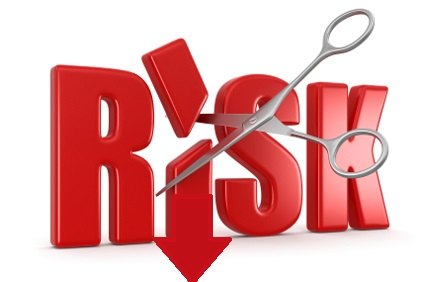
The solution isn’t to put everything in CDs and hope for the best. That can create the opposite problem — insufficient growth over a 25–30-year retirement. The solution is a purpose-built portfolio strategy that acknowledges how retirement income works.
At Common Sense Retirement Planning, we use several key strategies to manage sequence of returns risk:
The Bucket Strategy
We divide assets into three conceptual buckets based on when the money will be needed:
- Bucket 1 (0-5 years): Stable, low-volatility income sources — cash, short-term bonds, CDs, guaranteed income instruments. This is what you live on. It never goes in the market.
- Bucket 2 (5-15 years): Moderate growth with some protection — a balanced mix that grows your assets while managing downside risk.
- Bucket 3 (15+ years): Growth-oriented investments — a portion of your portfolio designed to outpace inflation over the long haul, invested more aggressively because it won’t be needed for many years.
The key insight: when the market drops, you’re not touching Bucket 3. You’re living off Bucket 1, which is stable. That means you never have to sell at the bottom.
The Retirement Income Generator (RIG)
On top of the bucket strategy, we layer in what we call a Retirement Income Generator — guaranteed or near-guaranteed income streams (Social Security, pension if applicable, and potentially an annuity layer) that cover your essential living expenses every month, independent of market performance.
When a retiree’s essential expenses are covered by guaranteed income, market volatility becomes much less threatening. A 20% market drop doesn’t affect your ability to pay your mortgage or buy groceries. It might affect your discretionary spending temporarily — but it doesn’t threaten your retirement. That’s the goal.
Market Buffers and Hedging
We also use specific investment structures that include downside buffers — strategies designed to limit losses in significant market declines while still allowing participation in market gains. These are especially valuable in the first five to ten years of retirement when sequence of returns risk is highest.
A Quick Self-Assessment – is Your Financial Plan Where You Want it to Be?
Here are three questions to ask yourself right now — especially if you’re within 10 years of retirement in the Greenville, Spartanburg, Anderson, or Upstate area:
- Is your current portfolio allocated the same way it was 10 years ago? If so, it may be carrying more risk than is appropriate for your stage of life.
- If the market dropped 35% tomorrow and stayed down for 18 months, would your ability to retire on time — or stay retired — be in jeopardy? If the answer is yes, you need a plan for that scenario.
- Do you have at least five years of essential income in stable, non-market-correlated instruments? If not, you may be exposed to sequence of returns risk without realizing it.
If any of those questions give you pause, that’s valuable information. And it’s exactly what we help people work through.
The Bottom Line for Retirees and their Retirement Plan
Market risk doesn’t disappear in retirement — it transforms. It becomes sequence of returns risk, and it’s arguably more dangerous than any specific market decline because it’s so poorly understood and so rarely planned for. A retirement financial plan built for Greenville, Spartanburg, and Upstate South Carolina retirees need to account for it directly.
We have offices in Greenville, Spartanburg, and Anderson, and we’d be happy to run a risk assessment and stress test on your current portfolio — at no charge.
References
1. Kitces, Michael. ‘Sequence Of Return Risk and Safe Withdrawal Rates.’ Kitces.com, 2014.
2. Pfau, Wade. ‘Retirement Researchers Guide Series: Sequence of Returns Risk.’ RetirementResearcher.com, 2023.
Securities and advisory services offered only by duly registered individuals through Madison Avenue Securities LLC, member FINRA/SIPC and a Registered Investment Advisor. MAS and Phillip Allen Inc. or Common Sense Retirement Planning are not affiliated entities.
The information and opinions contained herein provided by third parties have been obtained from sources believed to be reliable, but accuracy and completeness cannot be guaranteed by Common Sense Retirement Planning.
Investing involves risk, including the potential loss of principal. Any references to protection, safety or lifetime income, generally refer to fixed insurance products, never securities or investments. The examples above are hypothetical in nature and intended for illustrative purposes only. Your results will vary. Past performance does not ensure future performance or results.